If snail mucin is K-beauty's most famous ingredient, centella asiatica is its most trusted one. The little green leaf — sold as cica, tiger grass, or just centella — anchors entire product lines built around one promise: calming irritated skin.
And unlike a lot of trending ingredients, this one walks into the conversation with actual clinical research behind it.
That doesn't mean every green tube deserves your money. The evidence supports specific effects at specific concentrations, and the label tells you more than the marketing does. Here is what centella actually does, which claims hold up, and how to pick a product that contains more than a story.
What Centella Asiatica Actually Is
Centella asiatica is a medicinal herb with a long history in wound care — the tiger grass nickname comes from the folklore of injured tigers rolling in it.
Modern skincare uses extracts of the plant, and the interesting part is not the leaf itself but four compounds inside it: madecassoside, asiaticoside, asiatic acid, and madecassic acid.
These triterpenes are where the activity lives. They support collagen synthesis, dial down inflammatory signaling, and provide antioxidant protection. When a product works, it works because of them — which is exactly why concentration and extract quality matter more than the word cica on the front.
What the Research Supports
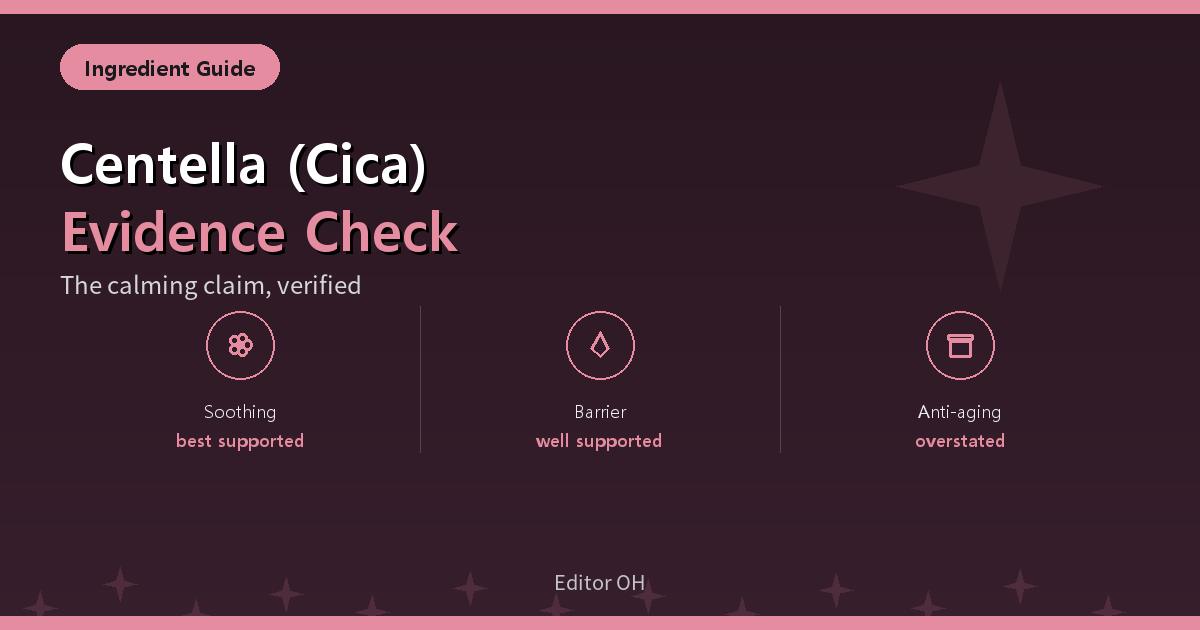
Centella has one of the better evidence files in the soothing-ingredient category. A 2024 review of topical centella in wound healing summarized clinical trials showing faster wound closure and improved recovery across wound types.
Newer lab work found madecassoside enhanced skin repair and protected skin cells against UVB-induced damage.
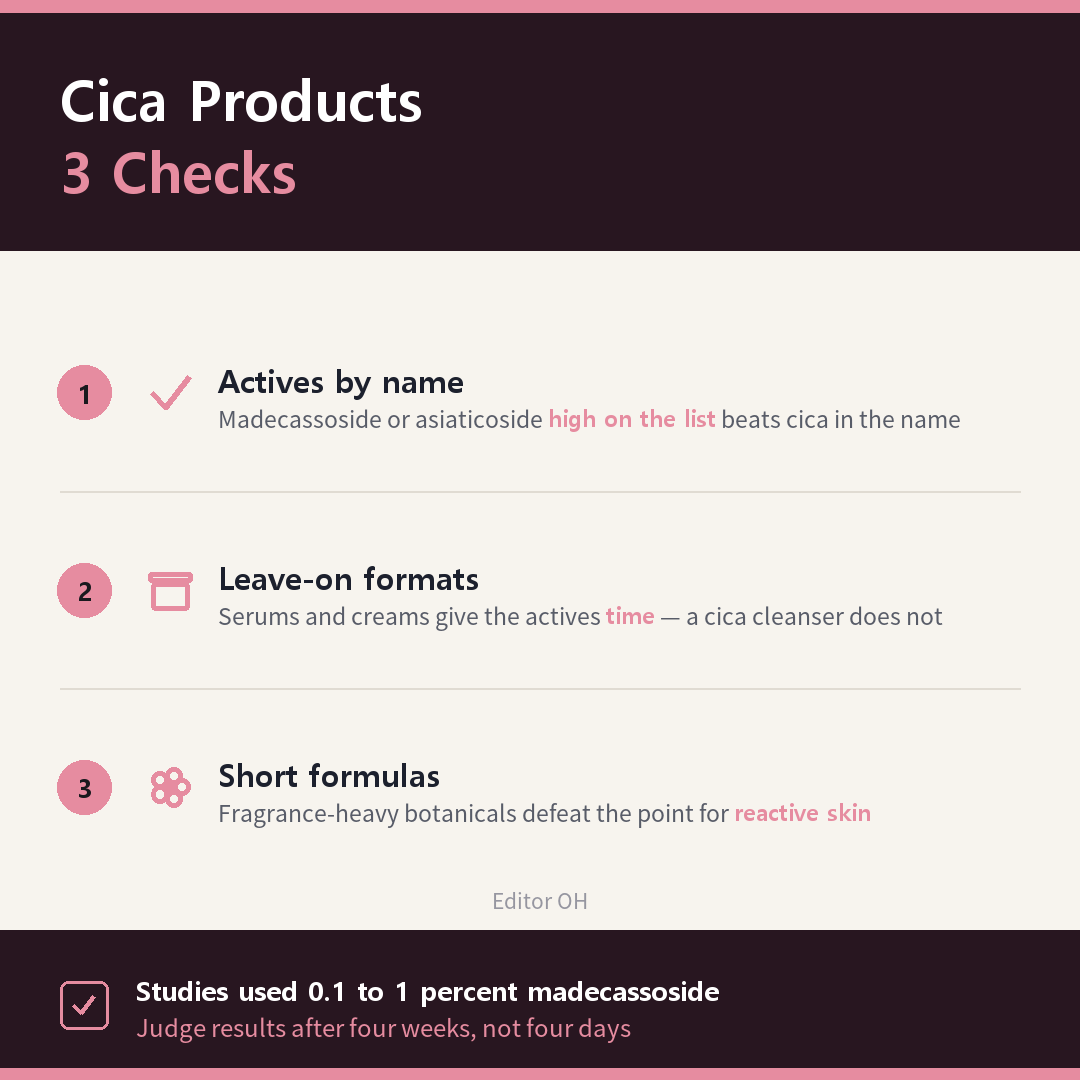
For everyday skincare rather than wounds, the numbers worth knowing: madecassoside at 0.1 to 1 percent showed significant improvements in barrier function and inflammation in a pooled analysis, and a cream containing it measurably reduced sensitivity scores in people with reactive skin after four weeks.
Sorted by evidence strength, that gives you three solid claims:
- Soothing irritation: the best-supported effect. Redness and reactivity decrease with consistent use over weeks, not days
- Barrier repair: centella supports ceramide production and reduces water loss through the skin, which is the mechanical definition of a healthier barrier
- Post-blemish recovery: the wound-healing pedigree translates reasonably well to helping marks and irritation heal cleaner
And one claim to discount: dramatic anti-aging transformation. The collagen link is real in lab settings, but a rinse-off cica cleanser or a low-concentration toner will not rebuild structural collagen. Treat wrinkle claims on cica products as decoration.
Cica vs Snail Mucin vs Everything Else Calming
K-beauty's soothing shelf is crowded, so here is the practical difference. Snail mucin is primarily a hydrator — its calming effect rides on moisture. Centella is primarily an anti-inflammatory — it targets the irritation signaling itself. They overlap but are not interchangeable.
If your skin is dehydrated and tight, snail-style humectants make more sense. If it is red, reactive, or recovering from actives, centella is the more targeted tool. Plenty of routines use both without conflict.
Side by side, the difference looks like this.
| Centella (cica) | Snail mucin | |
|---|---|---|
| Primary role | Anti-inflammatory: targets the irritation signaling itself | Hydrator: the calming effect rides on moisture |
| Reach for it when skin is | Red, reactive, or recovering from actives | Dehydrated and tight |
| Use both? | Yes, no conflict | Yes, no conflict |
How to Pick a Cica Product That Works
Cica became a marketing word years ago, and plenty of products carry the name with a homeopathic dose of the plant. Three checks separate the real ones:
- Look for the actives by name: madecassoside, asiaticoside, or centella asiatica extract high on the ingredient list beats the word cica in the product name every time
- Leave-on beats rinse-off: serums, creams, and ampoules give the triterpenes time to work. A cica cleanser is on your face for thirty seconds
- Simple base formulas: if you are buying centella to calm reactive skin, a formula loaded with fragrance and twenty botanicals defeats the purpose. Short lists are easier on irritated skin and easier to evaluate
Who It Suits and How to Use It
Centella is one of the most broadly tolerated actives in skincare — suitable for sensitive skin, retinoid users on recovery nights, and anyone whose barrier has been overworked by acids. Reactions are rare, though patch testing is still sensible with any new product.
Placement is flexible. Toners and serums go after cleansing; creams seal the routine. It pairs without drama alongside niacinamide, hyaluronic acid, and most actives, and it is a natural companion on the nights you give stronger ingredients a rest.
Quick FAQ
How long until centella shows results?
For active redness, some calming can be felt within days, but the measurable barrier and sensitivity improvements in studies took about four weeks of consistent use. Give it a month before judging.
Can centella replace my acne treatment?
No. It calms the inflammation around breakouts and helps marks recover, but it does not address the causes of acne. Use it to make your treatment routine more comfortable, not instead of it.
Is cica safe during pregnancy?
Topical centella has no established concern flags, but pregnancy skincare is a case-by-case conversation — run your routine past your doctor rather than a blog, ours included.
Centella is the second stop in our ingredient-evidence series — we gave the same treatment to K-beauty's favorite hydrator in our snail mucin guide.
The clinical review of centella in wound healing is on PubMed Central, the madecassoside skin-repair study is indexed on PubMed, and INCIDecoder shows you where the actives rank in any formula before you buy.
Which cica product actually calmed your skin — or turned out to be all packaging? Share it in the comments. We update these guides as new research lands.
Comments
Post a Comment